

Practices for "inner prepping"
(Don't panic, they include rest and celebration)

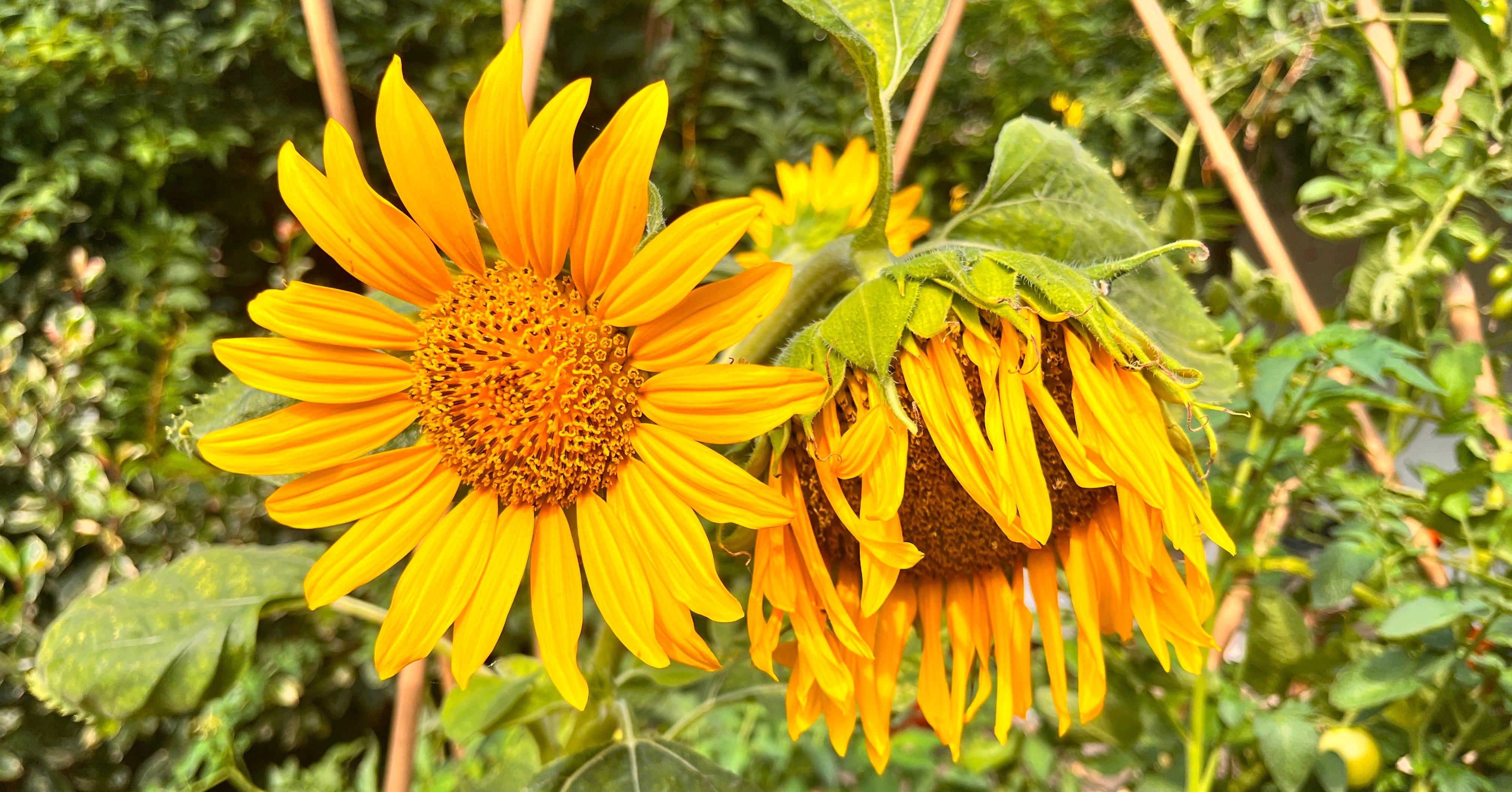
Earlier this year I was on BBC Radio 4’s Free Thinking programme talking about Foucault’s ‘Technologies of the Self’ (what is my life) alongside Anoushka Grose, a psychoanalyst and author. I was struck by the subtitle to one of her many books: The Revolution Will Be Internalised: On the unlikely politics of inner prepping.
“Huh. Inner prepping.” I thought “Is that what I have been trying to do all these years?”
You may love or hate the phrase (prepping certainly has a lot of associations that don’t seem super neighbour-love orientated to me), but it gave me a shorthand language for an emerging set of conversations I am seeing emerging across disciplinesg.
Also recently, I was invited to connect with the Inner Climate Response Initiative or iCRA. They explain why they exist like this:
Because inner work strengthens our emotional resilience, so that we can face difficult truths without shutting down. Being able to process the truth gives us the capacity to transform anxiety, grief or despair into courage, connection and meaningful action.
It doesn’t happen in isolation. When we process emotions and take action together, something powerful unfolds: a sense of belonging, the possibility of hope, the reconnection to joy.
This combination of processing the truth and taking meaningful action as part of a community creates lasting change within ourselves and in the world we’re striving to protect. That’s why inner work and communities of care are not side notes to climate action: they are its foundations.
“Inner work” is one of those phrases that make complete sense within some worlds and almost none outside of it. I prefer the phrase “soul work”, but your tradition or tribe might say formation, healing, self-awareness, spiritual growth, sanctification. Inner prepping then, is paying attention to our inner worlds, all the temptations to react to uncertainty out of our worst selves (sin, flesh, shadow, old scripts…..) with the particular aim of instead building resilience and resolve for tumultuous times.
My interest in this area began over a decade ago when my first child was born. Like many of us, I had grown up knowing about climate change, but it still felt a theoretical issue, the impacts far off. As I held this tiny, entirely dependent creature in my arms who might live eighty years, the gravity of those impacts zoomed close, took root in my bones, in my dreams. Somedays, honestly, I felt guilty for having a baby. I started frantically asking my friends who had been working on climate for years “how do you bear it? How do you not just go under?”
I did not find a lot of help in church, to be honest. Most Christians, at least then, were also ignoring the issue, or dismissed it with some line about God’s sovereignty. Prayer eased it, a bit, especially ragey ones, but it was coming to understand the bible as an apocalyptic text that helped the most. I suddenly saw my tradition in a completely new light. The new testament in particular can be read as largely a set of letters between outsider communities living through multiple ends of worlds, anticipating the final one, all while trying to learn to love each other, their neighbours, their enemies. Not making things worse by hoarding, panicking, othering, but sharing what they had and seeking each others good. I saw, if I squinted, a vision of what it might mean to live well, stay human, maybe even know joy through the upturning of the world.
With the help of this wild spiky text, a spiritual director, and the amazing intentional community I live in, I have spent the last decade with my eyes fixed on tying to become someone who might be of some use, whatever end of the world we face. I have come to believe that a world is always ending, somewhere, for someone, and the fact I have been largely shielded from that fact so far is not a right or a reward. I have been getting better at noticing and processing a lot of the emotions that were getting in the way of living the beautiful, rigorous vision my tradition offered. My sense of entitlement, frankly, to safety and prosperity, which is not something I was ever promised. My lack of trust, my craving for control, the addiction to comfort and convenience, those deceptive idols which we think we need to be happy and which in fact, often, just corrode the character. My failure to remember that it is lives of meaning and belonging in deep relationships which reliably help humans flourish, and that those can be lived under a wide range of external conditions. I still go through cycles of overwhelm (the wildfires in France being the current trigger, also ChatGPT going rogue and hacking companies, WTAF?) but I now know what to do. I have, I realise as I write this, built some resilience. I am grateful for that.
So, as we go into at least another month of summer here in the northern hemisphere, in which who knows what might happen (what hard things, what beautiful things) I thought that reminding myself of the medicine, sharing what I have found, and asking for yours might be in order. They are
Inner work
Grieve
Steady yourself
Sabbath
Surrender
Celebrate
Inner/Outer cross over
(because this is about being of some use, remember, not just avoiding feeling terrible all the time)
Practice sharing
Practice asking for help
Learn a skill
Grieve
I’m starting with this one because I like it least and avoid it most and sometimes we need to swallow the frog (it gets more uplifting from here, I promise). What therapeutic and healthy spiritual approaches to ‘inner prepping’ have in common is the extremely annoying contention that we have to actually feel our feelings. I find this so hard. Yes, I can well up at the drop of a hat listening to someone’s pain on The Sacred but actually allowing myself to acknowledge how much is being lost sounds…not a good idea. I have the personality type which is terrified of getting stuck in hard feelings, and most of me thinks that if I take the lid off it, that is where I will end up living. This is not true. As all good trauma work teaches, and as I write about in this post, the only way through is down.

The psalms help me a lot with this. You might need to find a grief circle. Perhaps it is music or theatre or nature that will give you space to unlock the box of numbing distraction what most of us keep our grief in. Bad news, you will need to go there eventually to get to steadiness. I know. I’m sorry. Lets be brave together.
Steady yourself
I wrote about this recently in a post about the corrosive effects of living in fear:

There is a reason [practices of attention and contemplation] show up in every great wisdom tradition. Whether it is mindfulness, meditation or meditative prayer (I do centring prayer), the habit of returning to the moment we are in, on repeat, is immensely powerful. Being still and breathing seems such a soft, silly thing to recommend in the face of global challenges but they function like a protective spell against terror…. It brings us back to our bodies, our actual surroundings when we are tempted into all kinds of lurid imagined futures. There is good evidence that this kind of inner work makes us more able to learn and change through increasing neuroplasticity, that it reduces “amygdala reactivity” and leads to “improved emotional regulation, cognitive function, and stress resilience”. When I’m thinking about the kind of people the world needs now, smart, emotionally regulated and resilient to stress sounds pretty close1.
Sabbath
You don’t need to go full Orthodox Judaism on this, but, well, those guys really understand something. We are not designed to be always on, always active, dancing on the string of stimulation. Regular, boundaried practices of real rest (not just numbed out leisure on the same screens we spend all day working on) make me feel so much saner. I cannot sabbath with my phone on (or my laptop or ipad). For the day a week I aim for (and often manage) I make my housemates hide them. We are about to go on holiday, and I will physically leave my devices behind. Knowing all the terrible things happening in the world, all the time, is not soul medicine. Is there a way you could you find some real, deep, rest this season? It is not indulgence. It is essential to resilience.
A note on this: I won’t be substacking in August. Look! I just wrote that without apologising. It helps that all the content is currently free to read but still…..
Surrender
This one is insanely simple and insanely difficult. It is essentially the recovery prayer: Lord, (Love, Universe, whatever you can bring yourself to pray to. I honestly think prayer in some form is going to be necessary here….) grant me the serenity to accept the things I cannot change, the courage to change the things I can, and the wisdom to know the difference.
Bringing my focus down from the global really helps me. Some of you are working on global issues, at global level, and I want to say a huge THANK YOU. I am sending a blessing your way today. For most of us, our sphere of influence is smaller, and there is loads we can be doing, with others, there. Paralysis at all I cannot change blocks me from doing what I can actually do. I ned to surrender. Again, again and again.
Celebrate
In our house we call this the “discipline of celebration”. Instability kicks us into fight-flight-freeze and in that state all we are capable of is scanning for threats. We can easily fail to notice what is still good, beautiful and true. All the myriad small glories of our days, the curve of a child’s cheek, the smell of a rose, an insect, a tiny act of kindness, a great day at work, a creative breakthrough. Don’t let yourself become blind to what is lovely, don’t let it pass you by. Pay attention and give thanks. It really, really helps. More than one thing can be true. I make a practice of reading A Brief for the Defence by Jack Gilbert, regularly, which reminds us:
If we deny our happiness, resist our satisfaction,
we lessen the importance of their deprivation.
We must risk delight. We can do without pleasure,
but not delight. Not enjoyment. We must have
the stubbornness to accept our gladness in the ruthless
furnace of this world. To make injustice the only
measure of our attention is to praise the Devil.
Practice sharing
The unlovely temptation that often kicks in times of instability is to hoard. To clench our possessions to our bosom as if they could keep us safe. Generosity is the antidote. We are made to be each others safety and neighbouring is the real (outer) prepping, so share something. Your space, your stuff, a meal, your inner life. Let down the walls, open your doors. Don’t listen to the lie of isolation.
Practice asking for help
In America especially, but also in parts of the UK, independence and self-sufficiency is valorised. I think this is a lie from the depths of hell. Humans, whether you look at this theologically or in purely evolutionary terms work best when we acknowledge our irreconcilable interdependence. We only change norms through modelling them, so even if you have a strong inner ick about it, ask for help. Ask to borrow something before you buy it, ask for help with childcare or to learn a new skill. And I don’t just mean from your family. Sharing and asking for help weave threads of new relationships and it is ultimately those we are going to need.
Learn or develop a skill
Yes, I want to be some use because I have built emotional resilience, can work with people not like me, can keep a cool head in a crisis and resist the zero sum logics around resources, but I also want to be some practical use. And these things are connected. Working with our hands feels good. Learning is pleasurable. I am slowly figuring out how to grow food and it steadies me so much to be in the garden. It might be mending things, or building things, or first aid, or community organising methodology, or leading collective ritual, or helping care for young children, but it is worth asking: if (when?) my neighbourhood is by a crisis, what skills might we need? Where are the gaps? Action fights anxiety.
That is all from me for a month. I am so, so grateful to have had this space to write honestly and humanly and to know it is helpful. A particular note of thanks to those of you with paid subscriptions, despite my attempt to get out from under market logics and make it less transactional. One of the things I will be discerning over this time of rest is where to go with that, but meanwhile, every person who shares their resources with me makes a real difference to how sustainable this weird vocation feels, our family life feels. It has been a small practice of asking for and receiving help, so thank you for helping me grow.
Once again, your heart seems big enough to bridge worlds. I am temperamentally nothing like you, but you inspire me to push beyond myself in new and difficult ways. Thank you for this.
When I first started practicing a daily meditation, most of my Christian friends thought I was nuts or worse, I was betraying our tradition. It did feel strange adopting an Eastern practice. And honestly I didn't think it would make any difference. But as is usually the case with these things, I was desperate.
I had been practicing for about 18-months when I found myself chatting with a friend I hadn't seen in some time. We were catching up on life as you do and he asked me about an individual who in the past would immediately flare irritation and annoyance. I didn't notice anything unusual in my reaction. It wasn't planned. But he stopped mid-sentence and said, "what just happened?" I had no idea. He said that he had never seen me react, or not react, like that before. There was no annoyance or irritation.
It was at that moment that I finally understood the power of these ancient practices--prayer, meditation, presence. They transform us, often imperceptibly, in a profound way. I too have found myself wanting to bury myself under the covers when I think about climate change. And it is not that I am sanguine about it. But I guess it is more that I have an inexplicable, almost irrational hope. Much like the promises of the great religions. Some have even called it faith. Thanks for this post, I took a lot a way from it.